E.K. But when cities, entire regions or countries are hit by massive floods, we also blame ourselves. We know that it is human fault, because we did not take proper care of these areas… However, we do not understand what humans failed to do before this tragedy, or perhaps what they neglected to do for centuries to prevent such tragedies from happening… And here again, I come back to the fundamental question: what are the essential principles of caring for nature to prevent flooding?
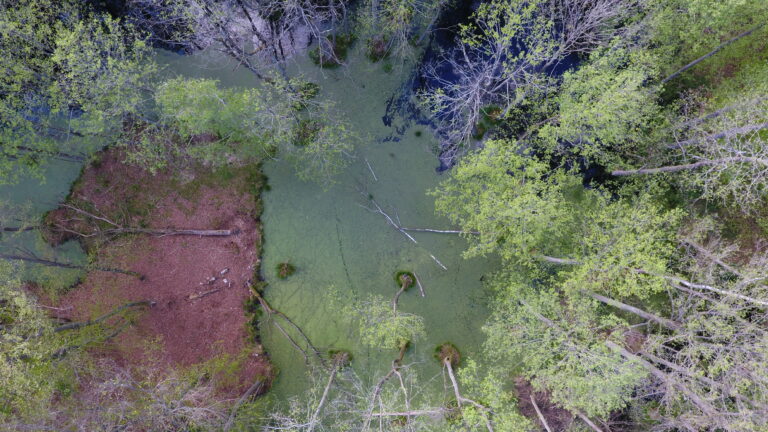
A.O.: In the context of the activities carried out by the Lipka Forest District, the key principle of flood prevention is to retain water in the landscape rather than drain it away quickly. For centuries, humans have drained wetlands, straightened rivers and accelerated water runoff, which today results in violent flood waves. The basis for caring for nature is to restore its natural retention mechanisms: protecting forests, peat bogs and floodplains, slowing down runoff through small retention and allowing rivers to meander naturally. A healthy, diverse forest and restored wetlands act like a sponge – they store water during rainfall and release it gradually. It is these actions that reduce the risk of flooding and stabilise water relations.
E.K.: ‘Stop the water – lowland water retention’ is a very important film. It is easy to understand and should be watched by everyone, regardless of age. We take our hats off to you, for how highly specialised you have become in maintaining the forest in good condition and learning about its needs. What was the main purpose of making this film?
A.O.: I confirm that the words: ‘Stop the water – lowland water retention’ are a very important film, fully reflecting its meaning and value. It is an extremely necessary film, addressing an important issue in a clear, accessible and understandable way for every viewer. Our goal was to present this issue in a simple form so that it would appeal to both younger and older audiences, building awareness and responsibility for the environment. This is a film that everyone should see, regardless of age, because it concerns issues that are fundamental to our common future. Water retention is a long-term process that requires patience and consistency. Before we begin, we must thoroughly understand the structure of water relations in the forest environment and observe how water behaves during periods of excess. In the film, an example of such activities is the watercourse in the Górzno forest district, which carries water from the catchment area to the Gwda River. It is a watercourse on which, for almost 30 years, we have been effectively retaining water, improving the balance of both channel water and groundwater. Our work began with the construction of four wooden weirs, which enabled channel retention.